Schaeffler tests new braking technology
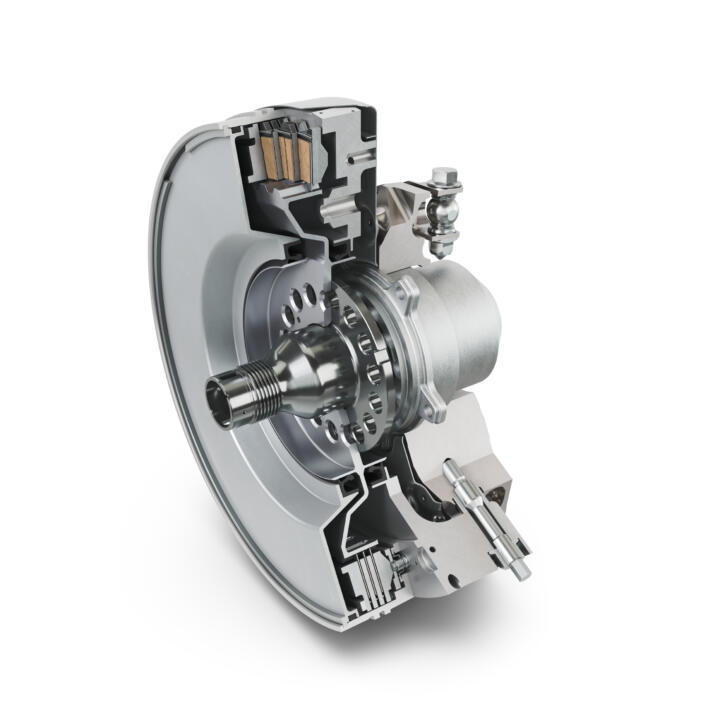
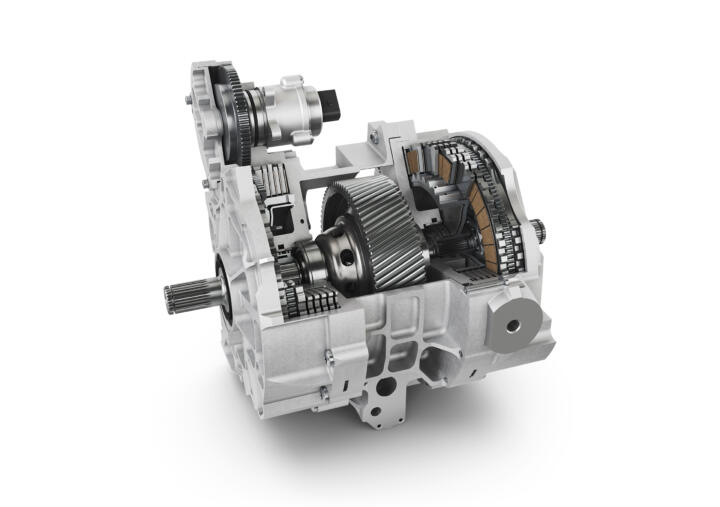
After an initial concept vehicle with an integrated lamella brake was presented to select customers at the Schaeffler Automotive Symposium last June in Bühl, the general public was now able to marvel at the prototype at the Nürburgring for the first time. The development goal is a highly integrated system unit for electric axles, combining the brake, actuator and oil/cooling circuit. In the long term, this could help replace conventional steel or drum brakes in suitable applications.
Brake system with no brake dust, noise or maintenance intervals
The wet lamella brake in the Innovation Taxi is a pre-development project for large-scale production. It is emission-free regarding brake dust, operates quietly and is designed for maintenance-free operation. The focus of the testing is the functionality and service life behavior of the system under the toughest conditions.
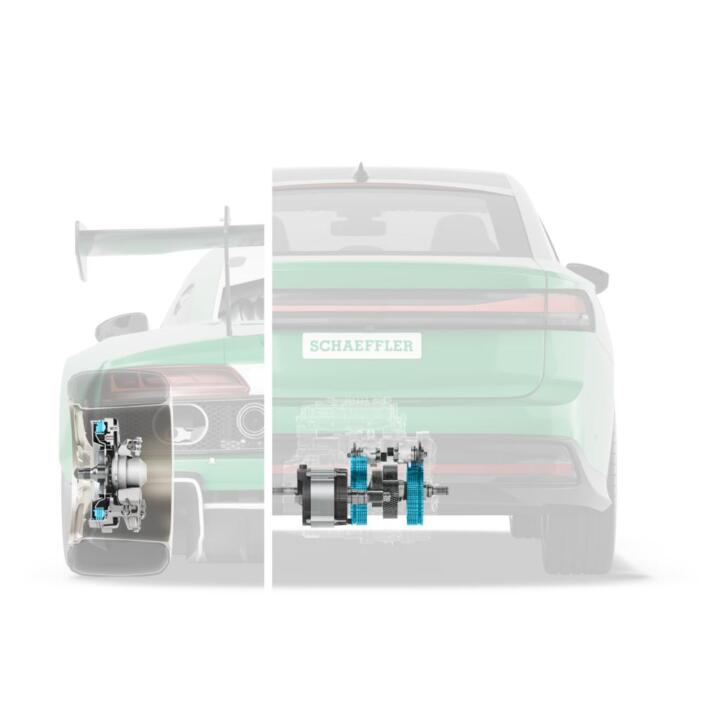
Schaeffler is particularly investigating torque and friction stability behavior. Due to its concept and packaging constraints, the unit, also referred to as wet brake, has been integrated into the rear wheels of the Innovation Taxi. External influences on the brakes, such as moisture, no longer lead to corrosion. This results in stable friction conditions and consistent performance.

“DTM is an ideal environment for us to test new technologies under real conditions. With the wet lamella brake, we are demonstrating a solution that is being used in motorsport in this form for the first time and also provides important input for large-scale development.”
From the racetrack to the road
A particular challenge in the Innovation Taxi is dissipating the high thermal loads generated by the enclosed rear-wheel brake. To address this, Schaeffler has developed a dedicated thermal management system with hydraulic pressure and suction pumps as well as multiple heat exchangers. “The system in the Innovation Taxi is a special motorsport solution. Under highly dynamic operating conditions, very high cooling performance per brake is required,” explains Andreas Wassmer, Director Concept Car Development at Schaeffler. “The data and experience derived from this form the basis for designing an efficient lubrication strategy for future e-axles with an integrated braking system.”
Strong potential for future generations of electric vehicles
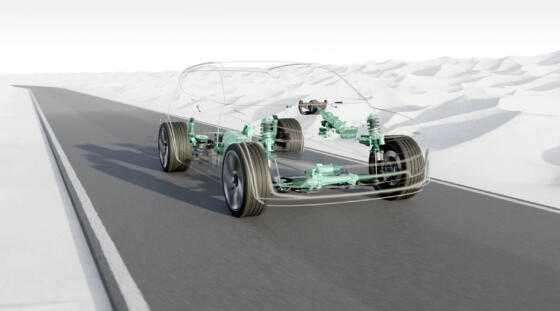
With the wet lamella brake, Schaeffler demonstrates how motorsport can serve as a development platform for sustainable mobility. The project combines motorsport, technology transfer and large-scale development in a particularly tangible way. This is especially relevant for battery-electric vehicles. In these vehicles, most braking events are handled by the recuperating electric motor. For the remaining braking events, especially critical braking points, a mechanical braking system will continue to be required. Schaeffler’s lamella brake meets all the fundamental requirements of a modern braking system and offers several additional advantages. These include emission-free operation to support future Euro 7 requirements, reduced unsprung mass at the wheel and the associated improvement in ride comfort, as well as greater freedom in vehicle design. In addition, the wet lamella brake is ideally suited to future vehicle architectures in which brake-by-wire systems play a key role. In autonomous vehicle concepts in particular, it serves as a technological enabler for innovative and highly integrated braking system solutions.


